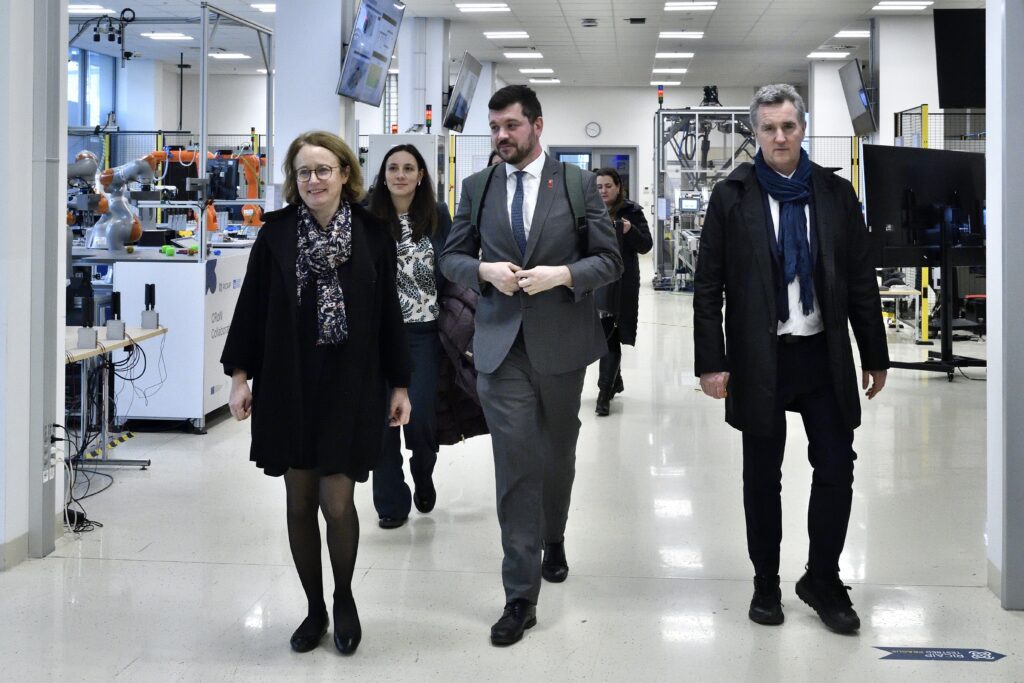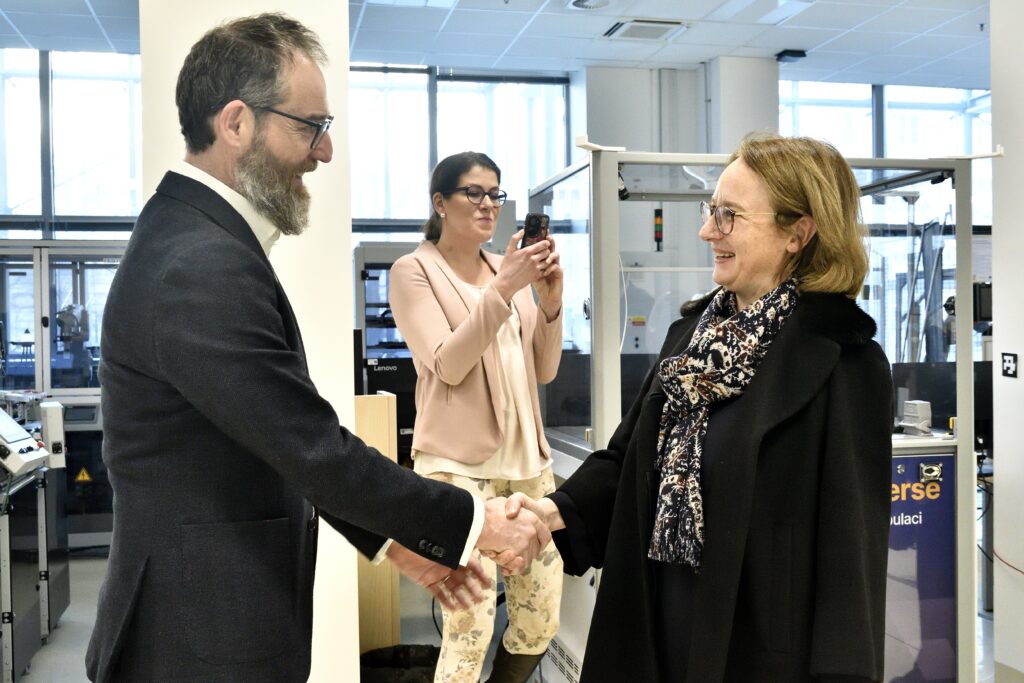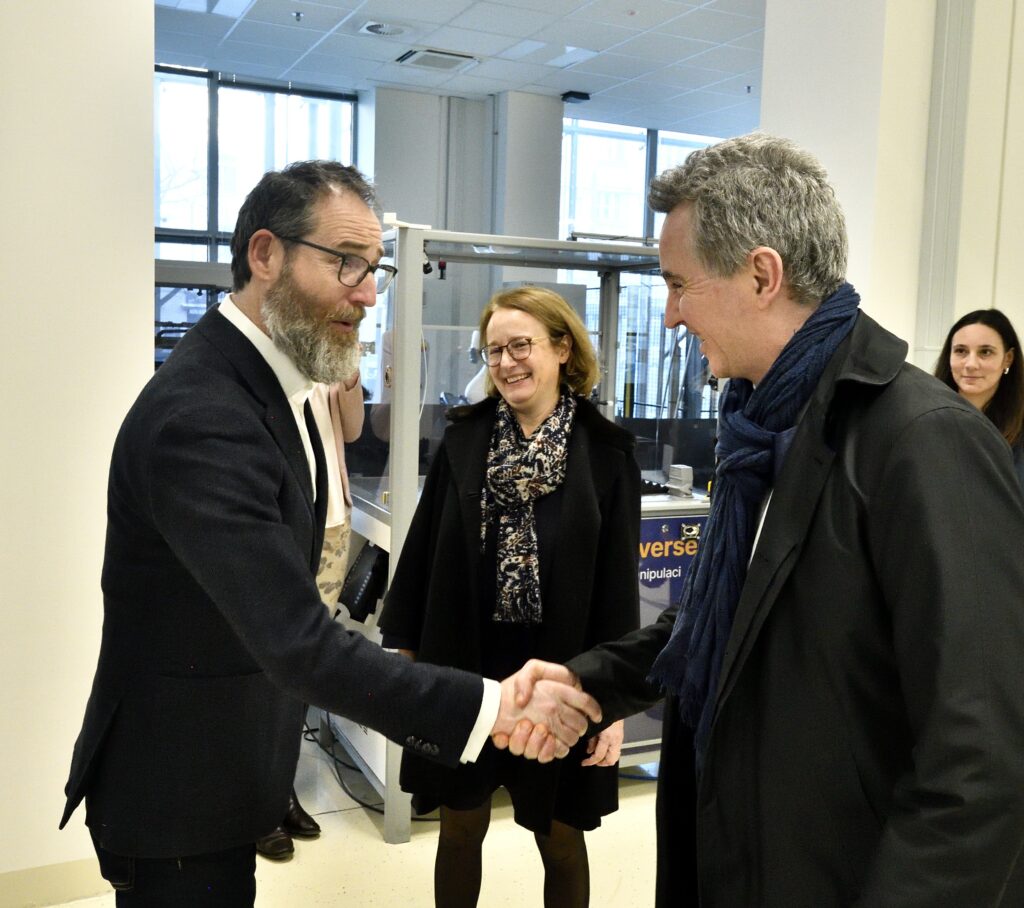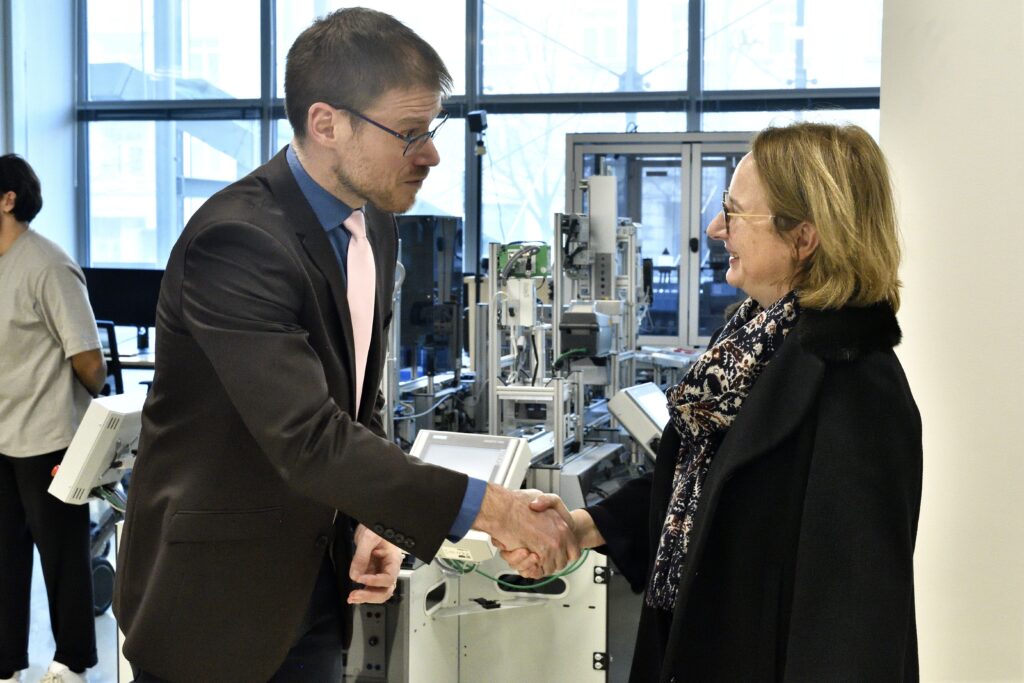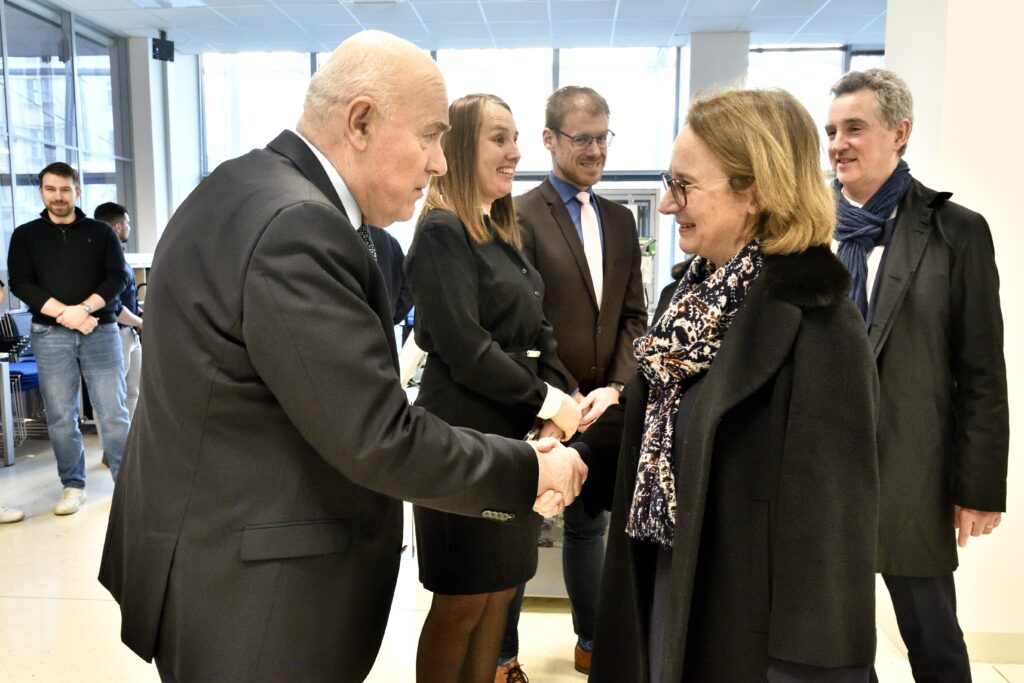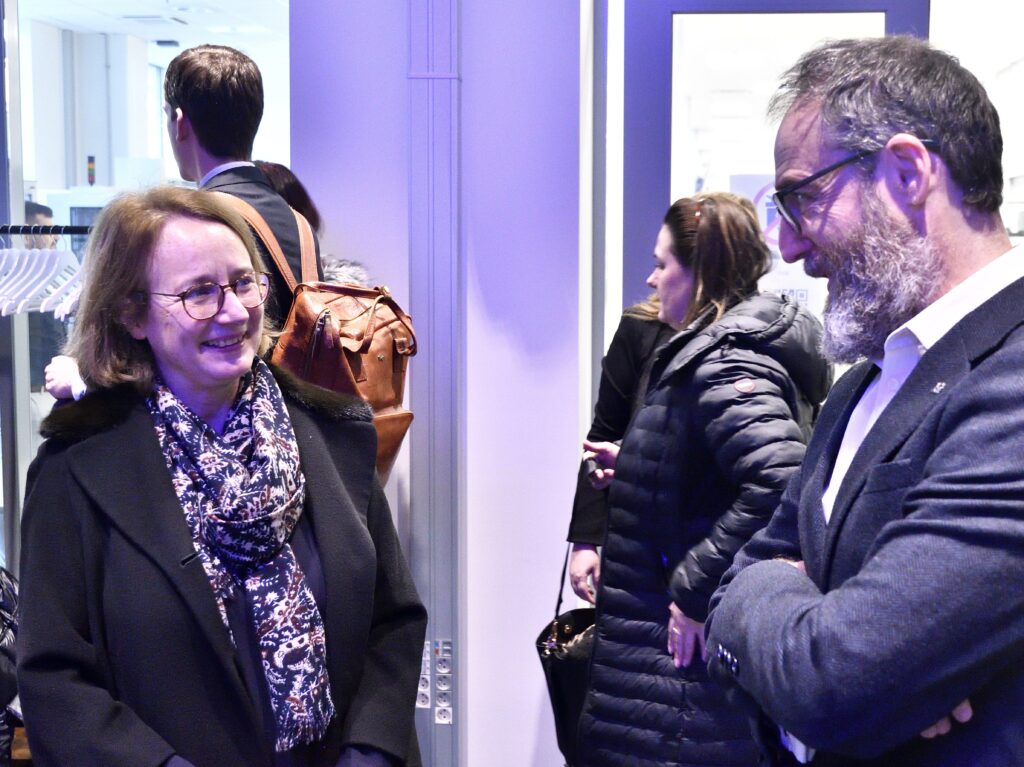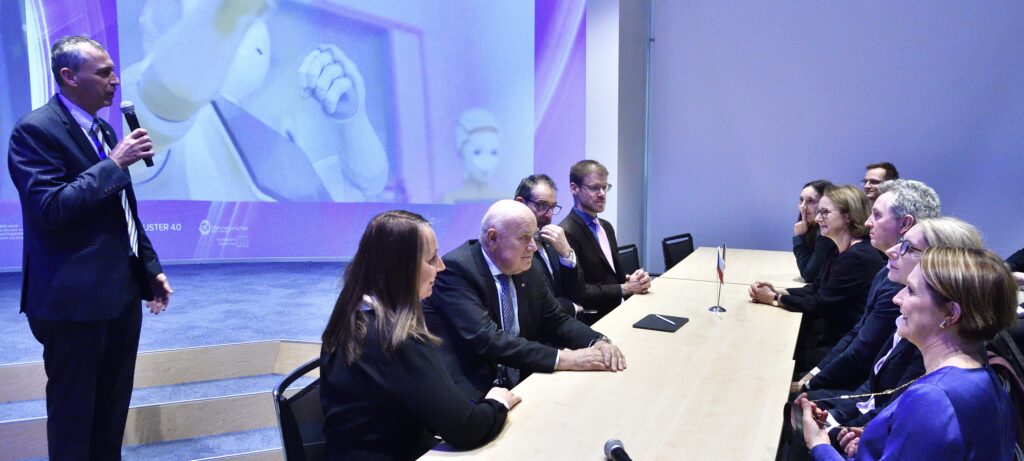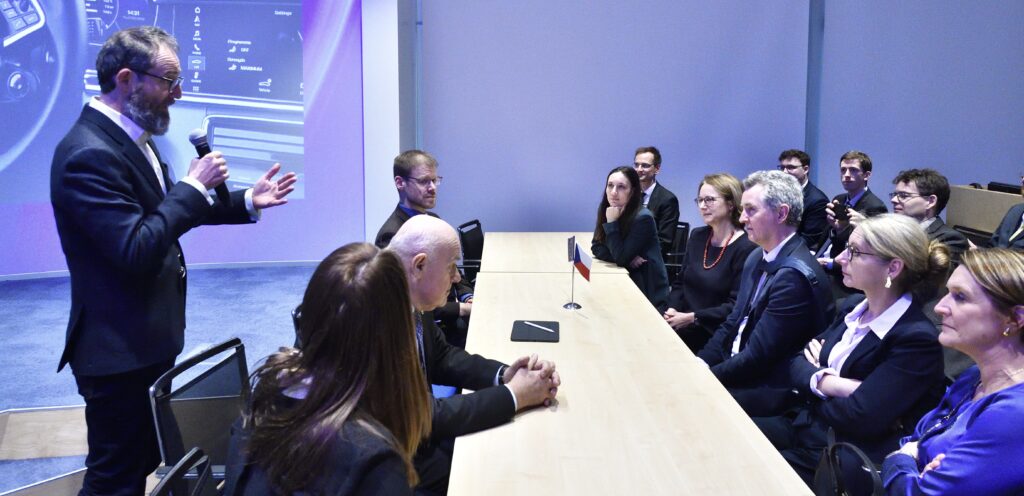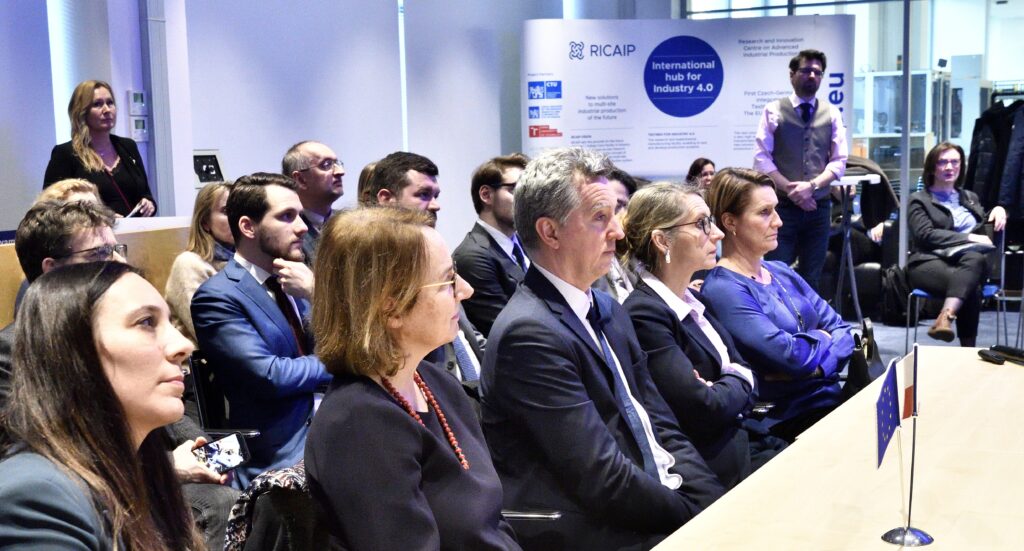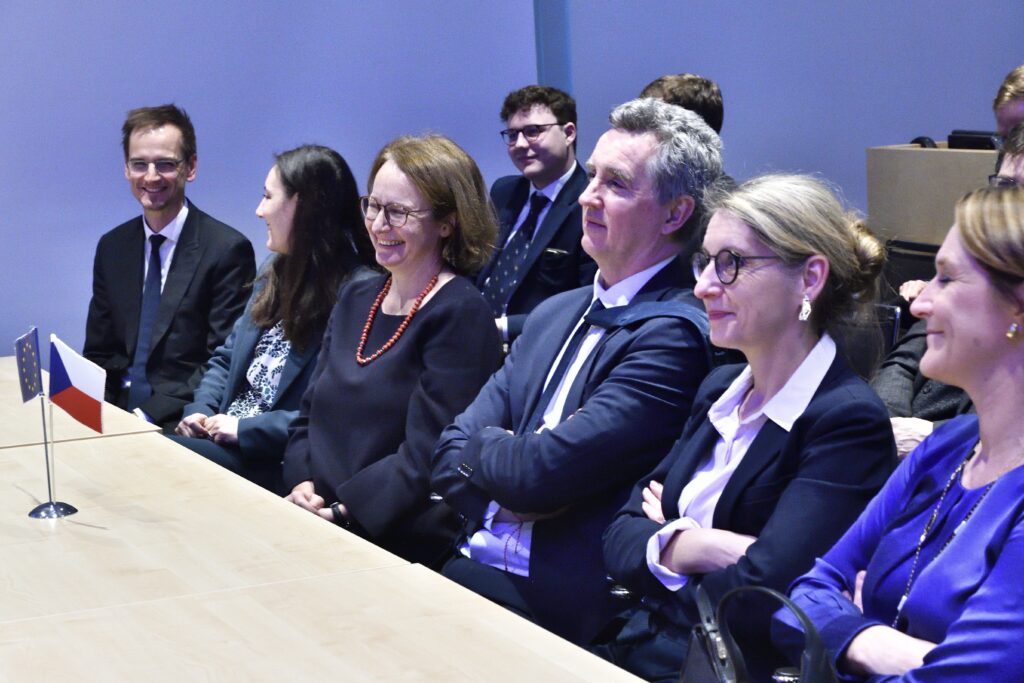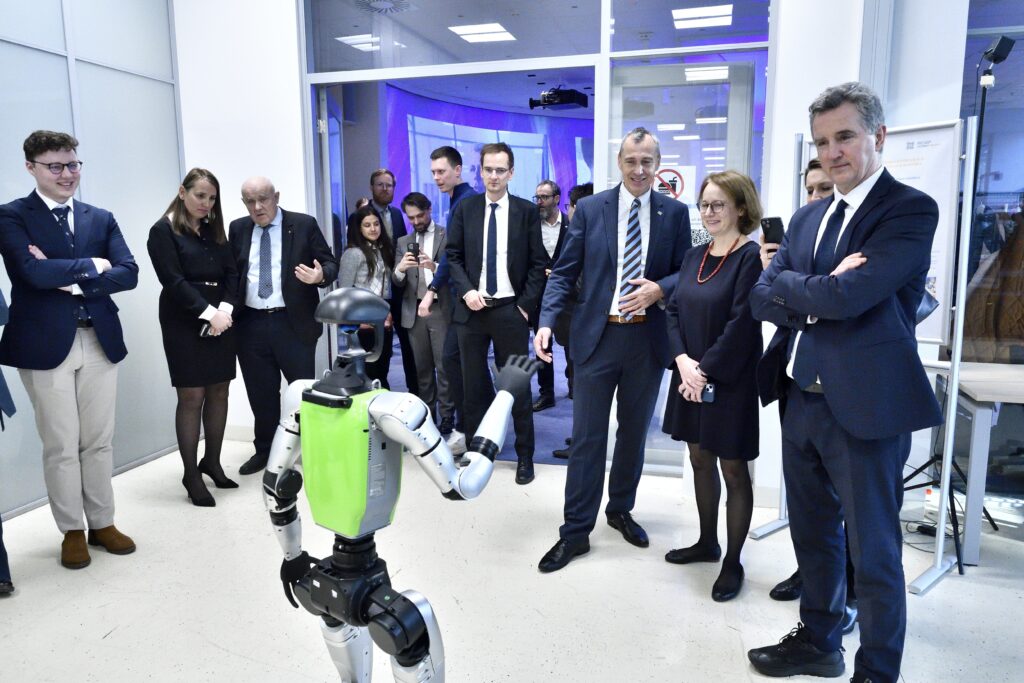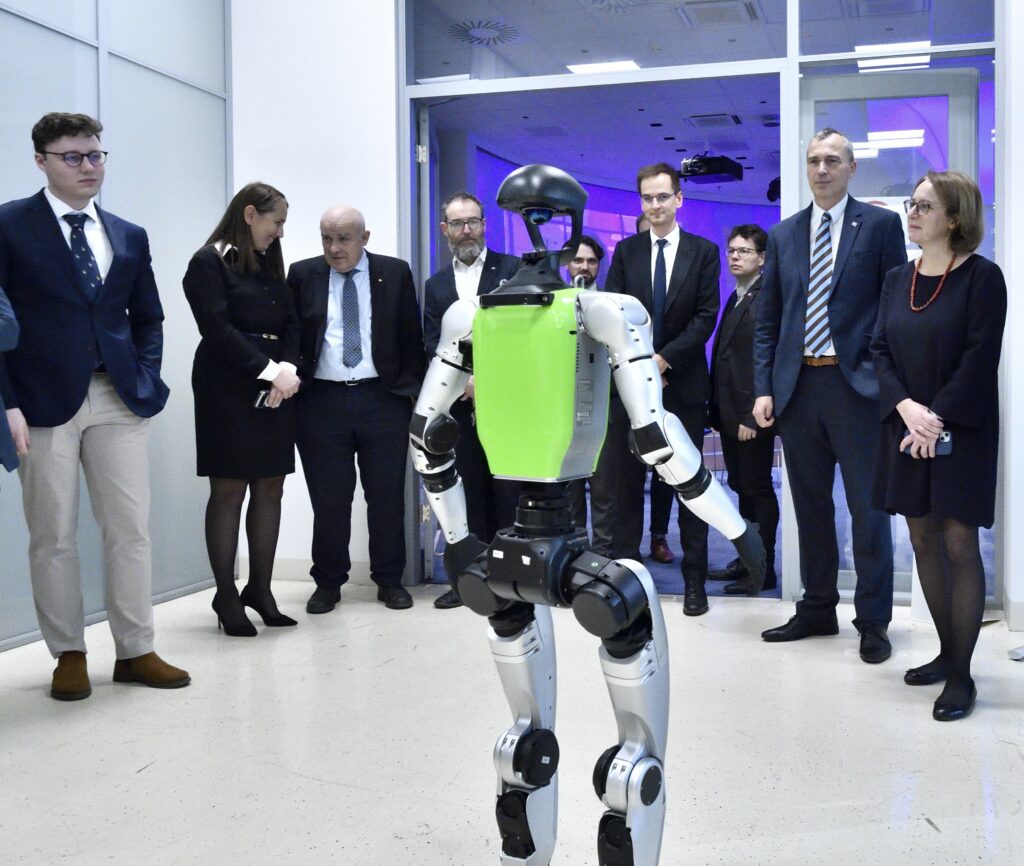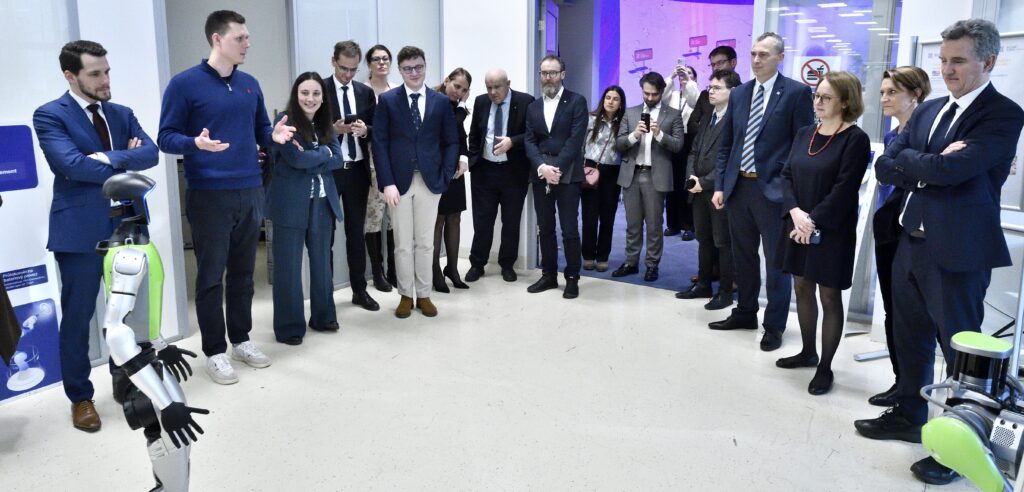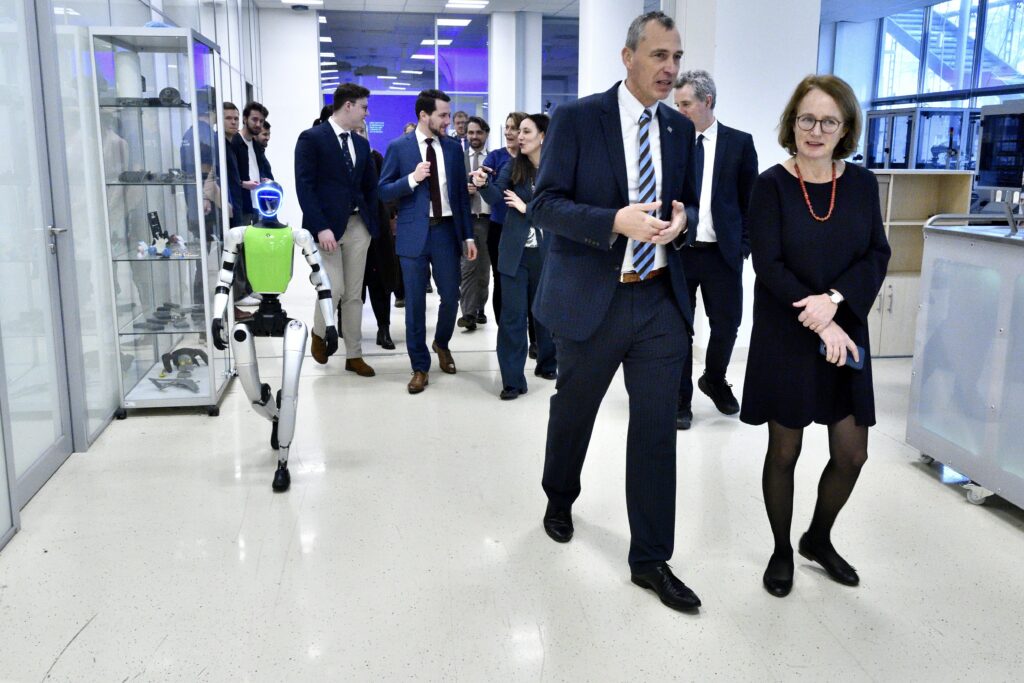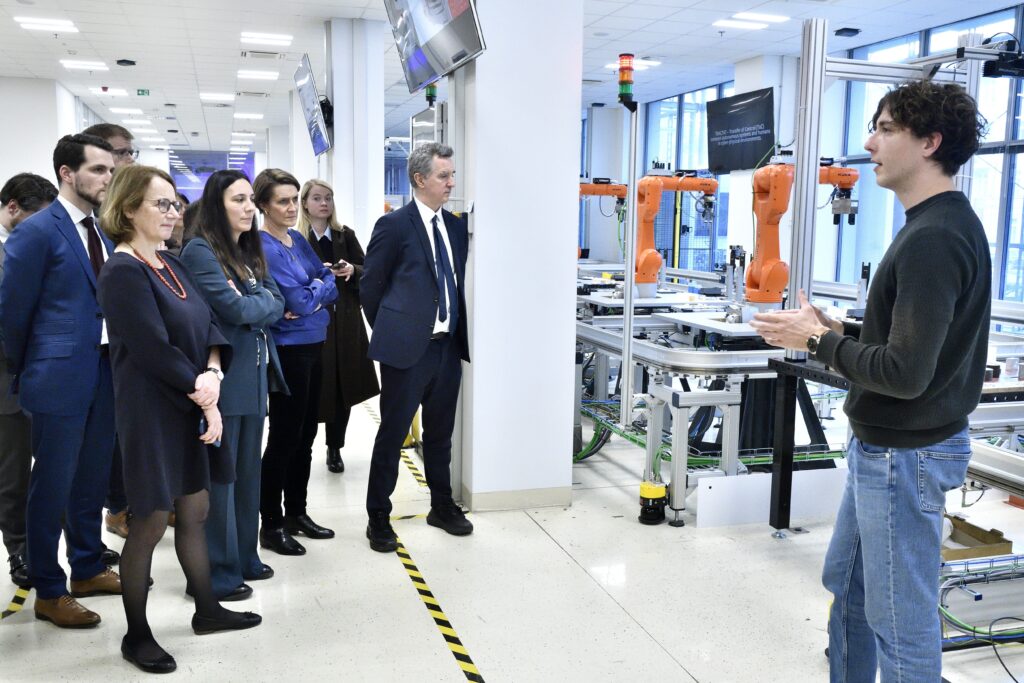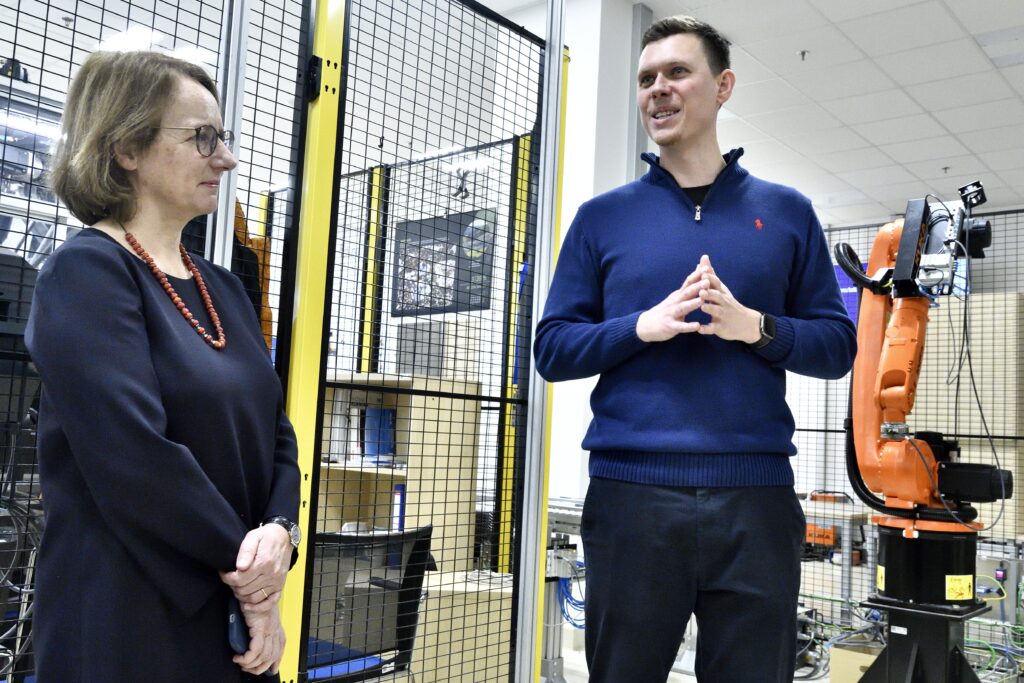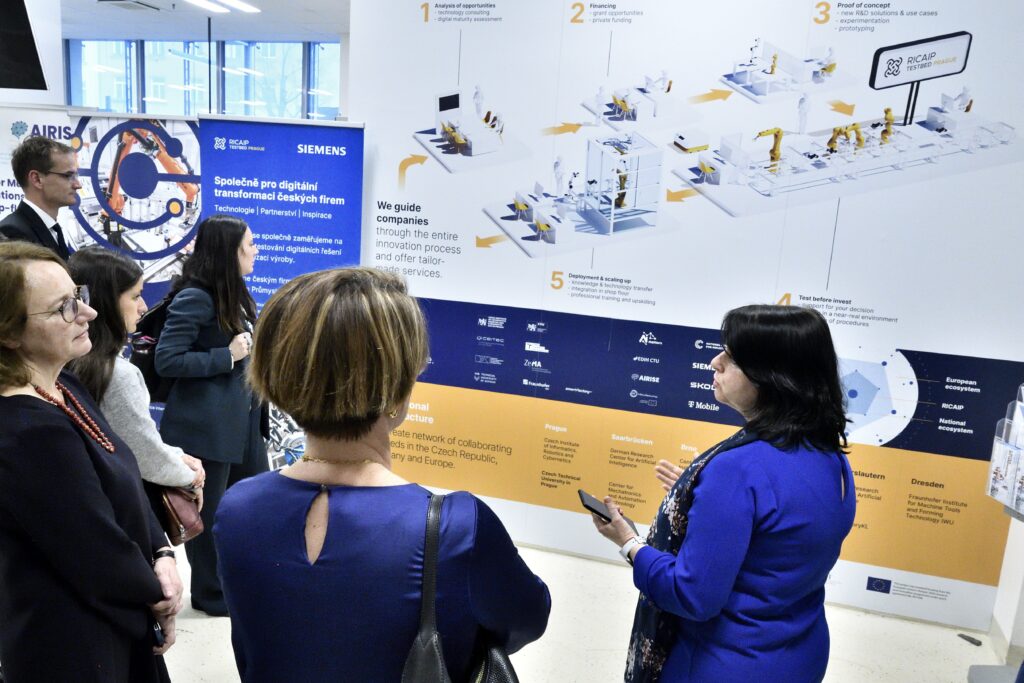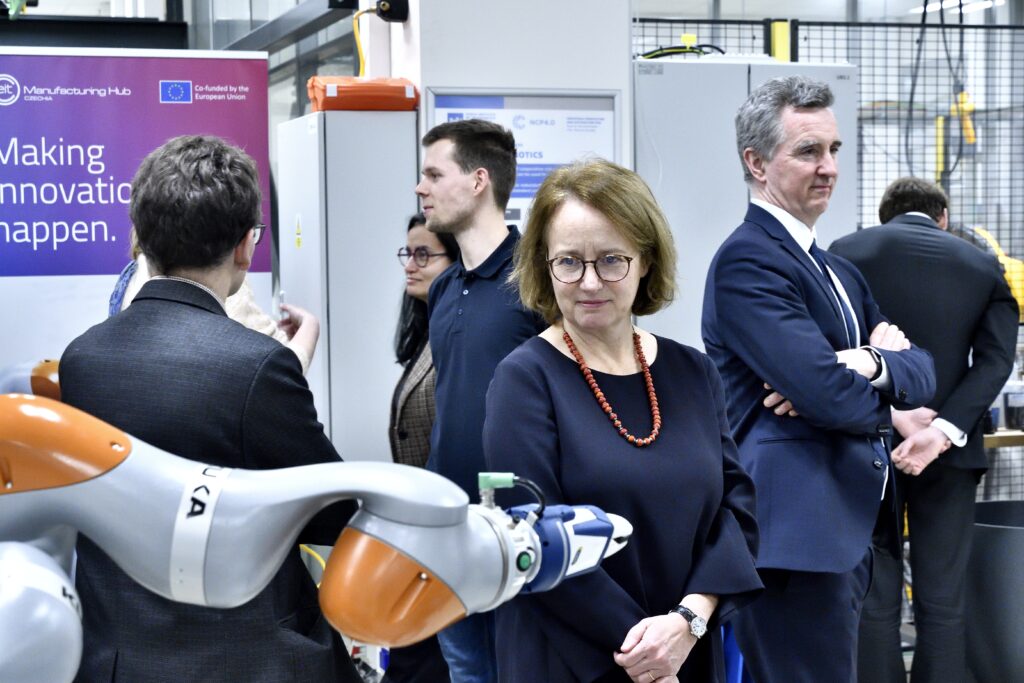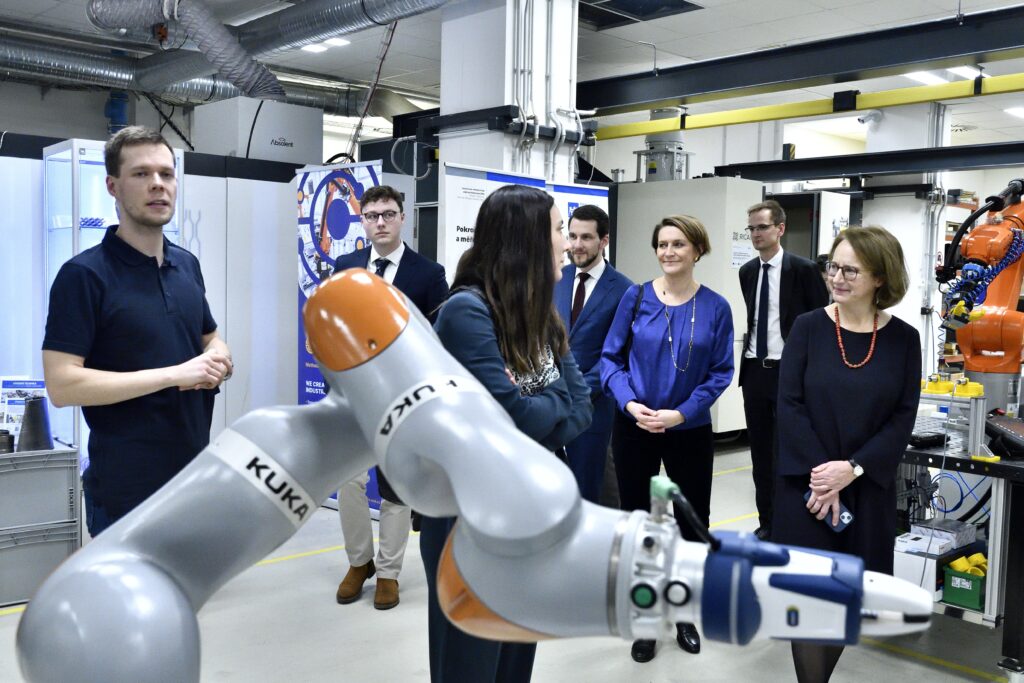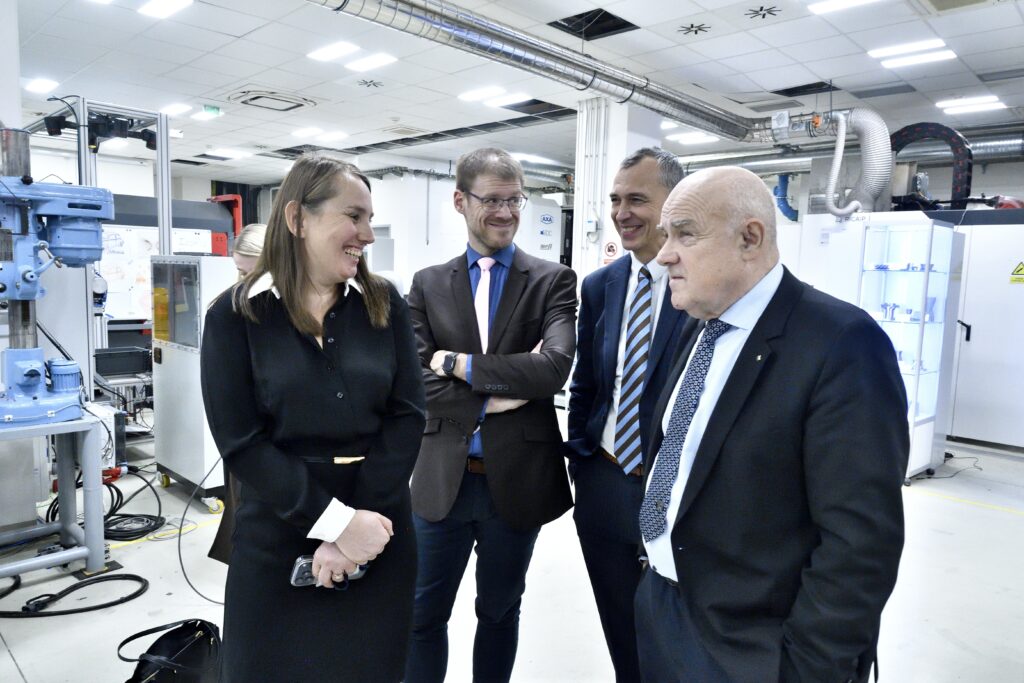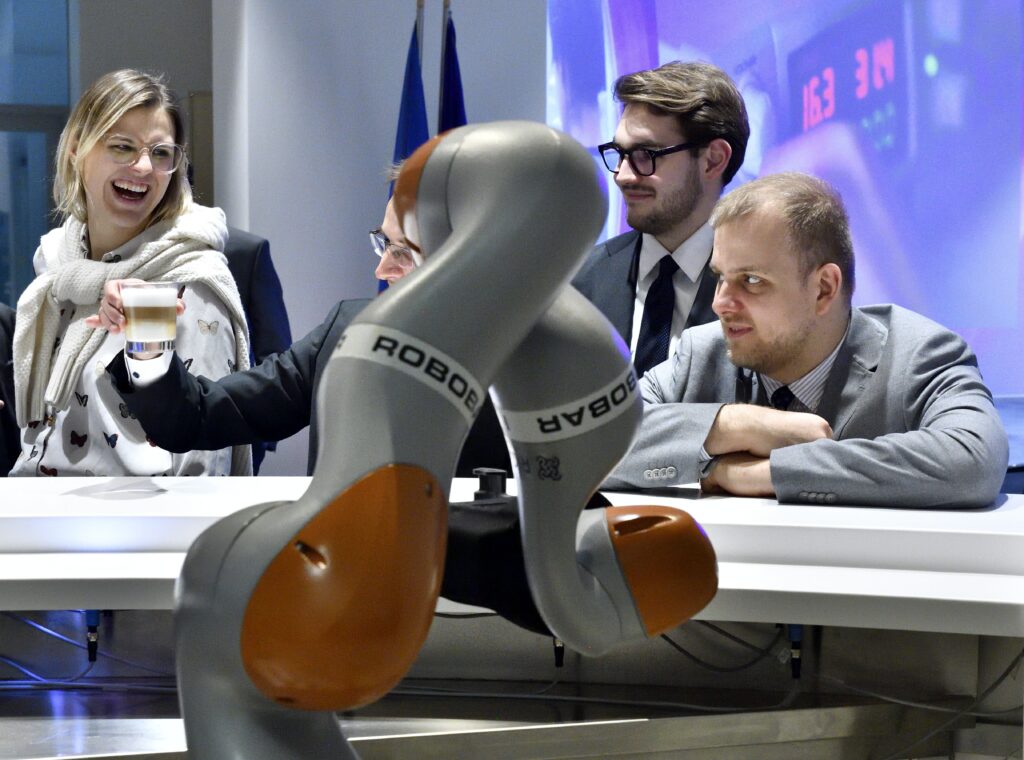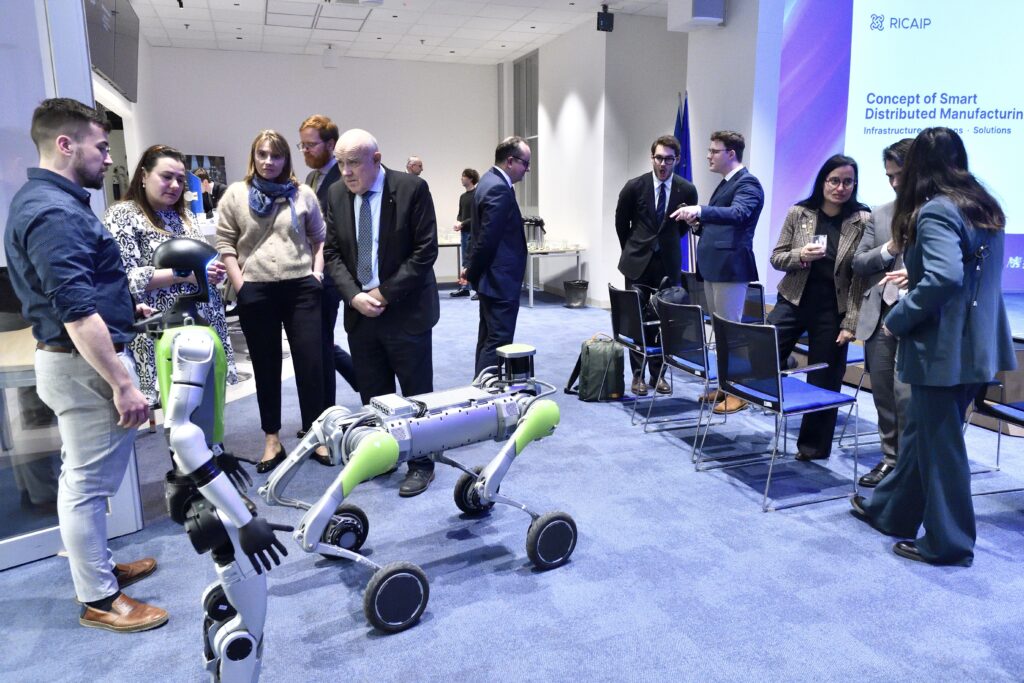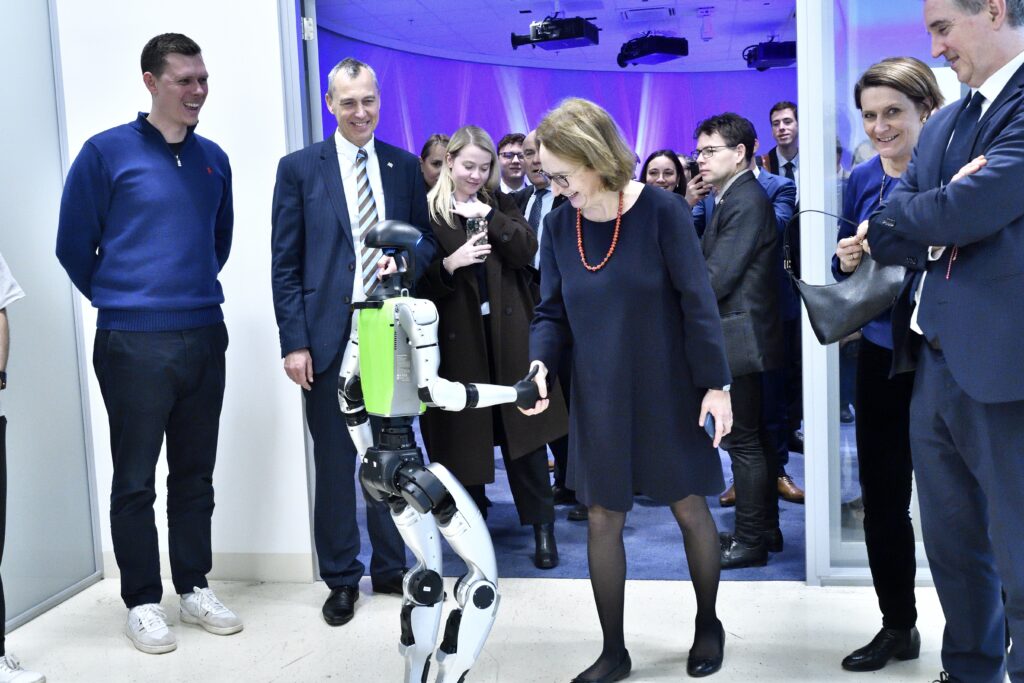
Digitalisation of industry and the rapid development of artificial intelligence were among the main topics of the European Commission’s visit to CTU, led by Céline Gauer, Director-General of the Commission’s Task Force for Reforms and Investments (SG REFORM). Autonomous robotic lawn mowers with advanced AI, capable of independently mapping terrain, and digital twins of industrial production lines that automatically generate manufacturing sequences are just a few examples of innovations developed at one of the most advanced Industry 4.0 laboratories in Central and Eastern Europe – the RICAIP Testbed at CIIRC CTU in Prague, where university representatives welcomed the the delegation from the European Commission.
Céline Gauer, Director-General of the Commission’s Task Force for Reforms and Investments (SG REFORM), and her colleagues were primarily interested in the status of projects supported by the National Recovery Plan, specifically EDIH CTU and AI-MATTERS/TEF. Discussions also focused on support for digitalisation, the expansion of artificial intelligence and the continued strengthening of Europe’s technological independence. “It is great to see, through practical examples, what can be achieved by connecting cutting-edge scientific research, a strong university environment and the entrepreneurial spirit of the industrial sector. CTU is one of the examples of effective use of European support on the path towards digitalisation and technological excellence in the European Union,” said Céline Gauer during her visit to CTU.
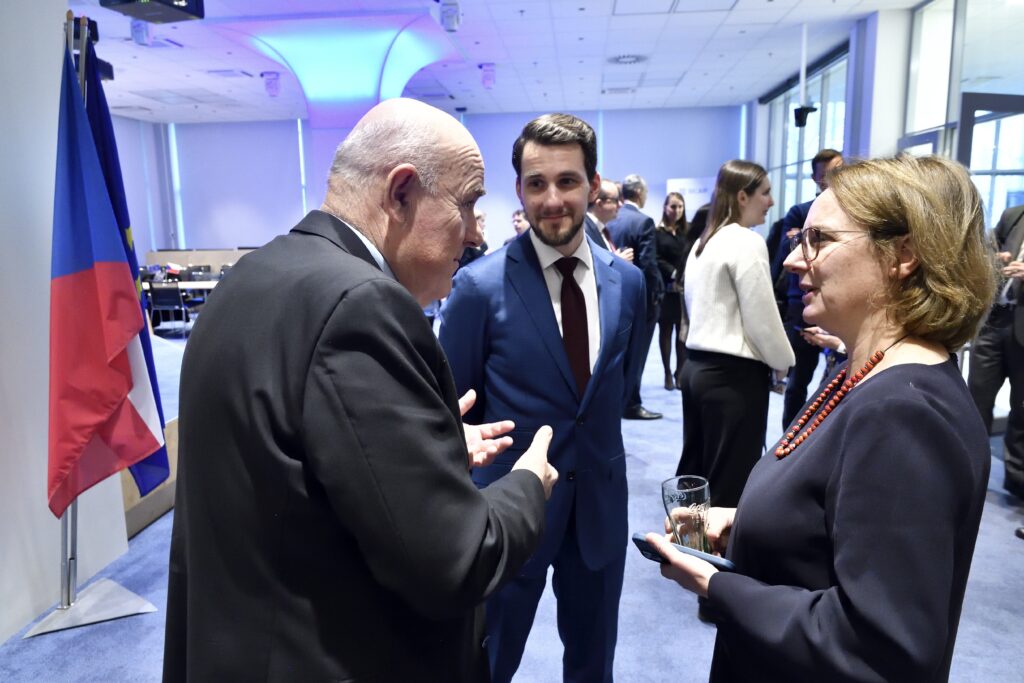
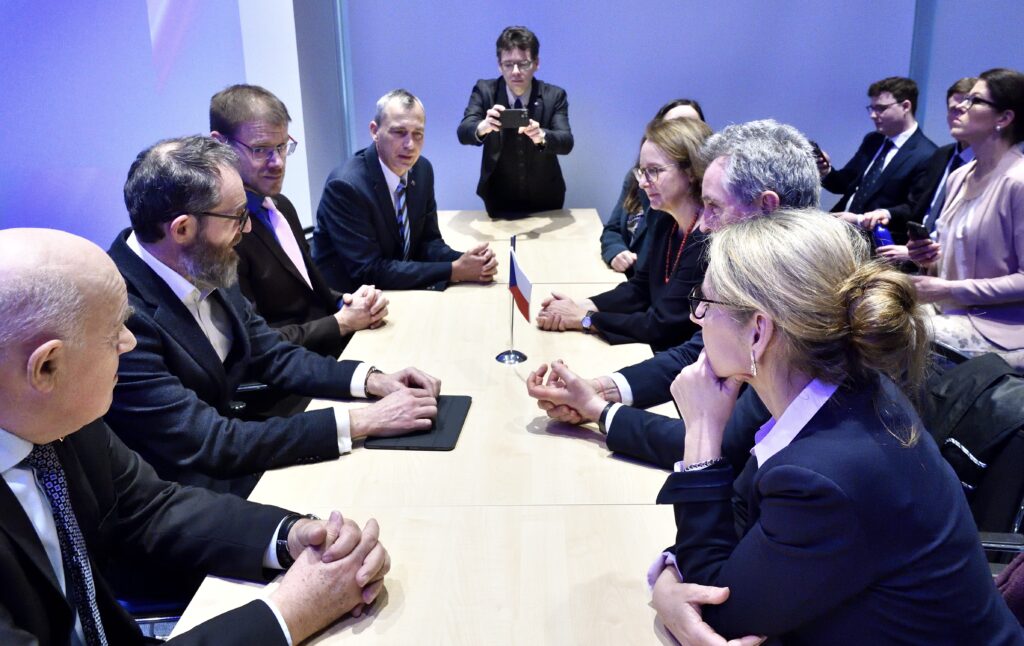
The European Commission delegation, composed of representatives of SG REFORM as well as senior officials from the Directorate-General for Economic and Financial Affairs (DG ECFIN), accompanied by representatives of the Czech Ministry of Industry and Trade, was first welcomed by CTU Rector Prof. Michal Pěchouček and Vice-Rector for International and Governmental Affairs Prof. Ladislav Krištoufek.
“The meeting confirmed that direct dialogue between European institutions and research organisations is crucial for effectively setting EU support mechanisms and shared priorities,” said Michal Pěchouček, adding: “We share the need to significantly strengthen cooperation between the university and industry, support the creation of new technology start-ups and spin-offs, and further improve the transfer of scientific results into practice. The desired outcomes of this effort will positively benefit not only the companies and the university involved, but society as a whole.”
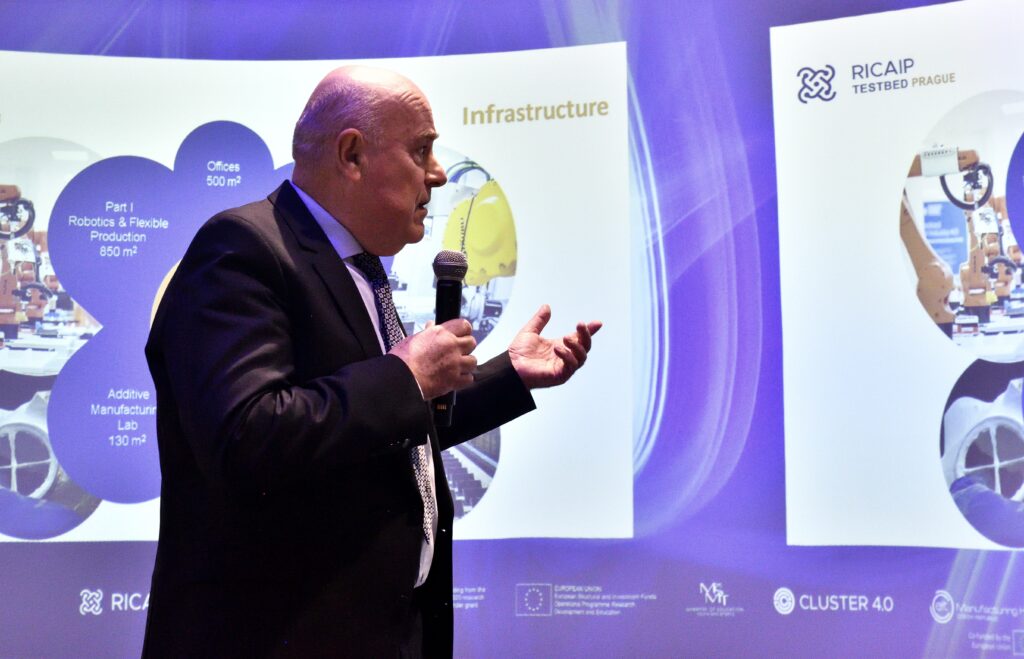
The Scientific Director of the Czech Institute of Informatics, Robotics and Cybernetics (CIIRC CTU), Prof. Vladimír Mařík, together with the Director of EDIH CTU Barbora Zochová, the Head of the Czech node of AI-MATTERS Ondřej Beránek and RICAIP Testbed Prague researcher Tomáš Jochman, presented examples of successful digital transformation projects in Czech companies. These projects illustrate the practical use of artificial intelligence, robotics and digital twins – virtual models of real machines and production processes that enable simulation, testing and optimisation in a digital environment.
One example is a Czech company testing an autonomous robotic workstation for preparing metal parts at CTU, using advanced machine vision. Other highlights included robotic manufacturing with an integrated quality control system on a digital twin platform and solutions for resilient and adaptive supply chains developed in cooperation with the automotive industry. Considerable attention was also drawn to a project involving autonomous robotic lawn mowers using advanced AI and vision systems developed and tested directly in the RICAIP Testbed Prague, which is part of the European Research and Innovation Centre on Advanced Industrial Production RICAIP. The testbed provides companies and academic partners with real conditions for implementing innovations in practice while connecting national and European projects. The result is successful technology transfer – bringing scientific ideas into real-world application.
“We have long sought to create an environment in which not only our testbed, but also research teams from other institutions, can more easily engage in cooperation with the commercial sector,” explains Vladimír Mařík. “Our primary goal is to contribute to strengthening the competitiveness of Czech and European industry and to accelerate the deployment of artificial intelligence and advanced technologies in manufacturing.” The outcome is a strong connection between cutting-edge infrastructure and practical application at CTU, from which both Czech and European companies benefit.
Photo gallery