
How RICAIP connects distributed industrial testbeds to enable adaptive, resilient, and AI-driven manufacturing across Europe.
Modern manufacturing must respond faster than ever to changing demands, shifting capacities, and unexpected disruptions across the value chain. Traditional production planning often relies on a single “ideal” scenario, assuming that production capacities and resources remain continuously available. In reality, however, industrial environments are dynamic and constantly changing.
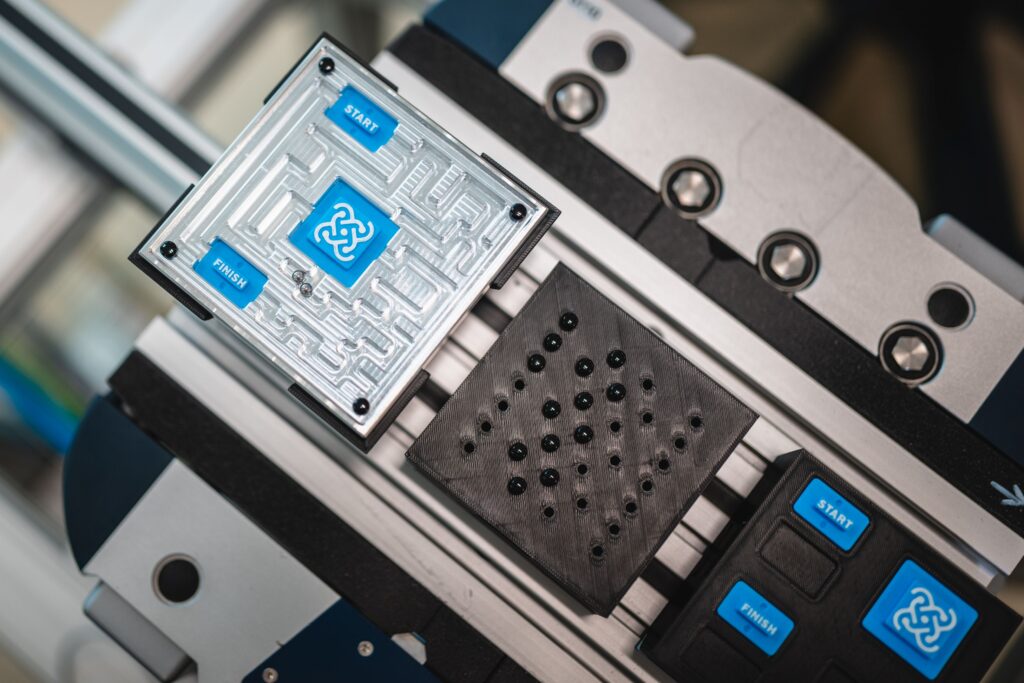
With Manufacturing as a Service, RICAIP explores how manufacturing can truly adapt compared to traditional planning that still relies on a single “ideal” scenario, as capacities may change and resources might not always be available. RICAIP provides a unique infrastructure connecting Czech industrial testbeds in Prague and Brno with facilities in Saarbrücken and Kaiserslautern in Germany for developing and testing these scenarios for more flexible and resilient production
RICAIP teams worked jointly on the production of a modular product, manufactured using multiple technologies across connected sites. Its core production took place in Prague, using advanced technologies such as 3D printing, machining, and automated assembly to manufacture and integrate key parts of the product.
The execution of each operation was continuously coordinated by a central Manufacturing Execution System (MES) which defined the workflow, assigning operations to available resources and synchronising all steps in real time. By selecting a product variant, the entire production is configured and planned automatically, using advanced methods such as Graph Neural Networks.
The testbed in Saarbrücken used a multi-agent system for production execution, integrating a complex system using standardized interfaces with defined semantics. The testbed in Brno was one of the production sites, manufacturing specific components and enabling remote process inspection using an autonomous mobile robot.
All components were brought together, thanks to standardized interfaces, real-time data exchange, and the integration of existing machines into one coordinated environment, handled automatically using modern methods based on machine learning and AI. It was demonstrated with T-Process Platform, an industrial MES deployed at many sites, making its adoption in real environments straightforward. RICAIP Manufacturing as a Service concept allows companies to benefit from greater flexibility and faster response to changing conditions across the entire value chain.
A New Vision for Flexible and Resilient Manufacturing
At RICAIP, researchers and industrial partners are developing the concept of Manufacturing as a Service (MaaS) — enabling production systems to dynamically adapt according to real-time conditions, available resources, and operational requirements.
The new video “RICAIP Flexible Production & Manufacturing as a Service” presents this concept through the production of the modular demonstrator RICAIP Maze, manufactured across interconnected industrial testbeds in Prague, Brno, Saarbrücken, and Kaiserslautern.
Manufacturing as a Service in Practice
RICAIP provides a unique distributed infrastructure connecting Czech industrial testbeds in Prague and Brno with facilities in Saarbrücken and Kaiserslautern in Germany. This interconnected environment enables the development and testing of advanced manufacturing scenarios designed for flexible and resilient industrial production.
The demonstrator showcases the collaborative production of the RICAIP Maze, a modular product manufactured using multiple technologies across connected production sites. The core production process takes place in Prague, where advanced technologies such as 3D printing, machining, and automated assembly are used to manufacture and integrate key components of the product.
”Manufacturing as a Service offers a different approach for more flexible and resilient production. Instead of fixed plans, production is organized automatically in real time, based on what is available.”
Prof. Vladimír Mařík, Scientific Director, CIIRC CTU
Intelligent Production Coordination
“Advanced technologies such as 3D printing, machining, and automated assembly are used to manufacture and integrate key parts of the product. The execution of each operation is continuously coordinated by a central system.”Michal Rytíř
At the center of the production process is a central Manufacturing Execution System (MES), which defines workflows, assigns operations to available resources, and synchronizes production steps in real time.
By selecting a product variant, the entire production process is configured and planned automatically using advanced methods such as Graph Neural Networks.”Pavel Burget
The system demonstrates how production operations can dynamically adapt to changing industrial conditions while maintaining coordinated execution across geographically distributed sites.
Distributed Manufacturing Across Europe
The testbed in Saarbrücken demonstrates a multi-agent system for production execution, integrating not only individual machines but also complex production systems through standardized interfaces with defined semantics.
The Brno testbed contributes manufacturing operations for selected components and enables remote process inspection using an autonomous mobile robot.
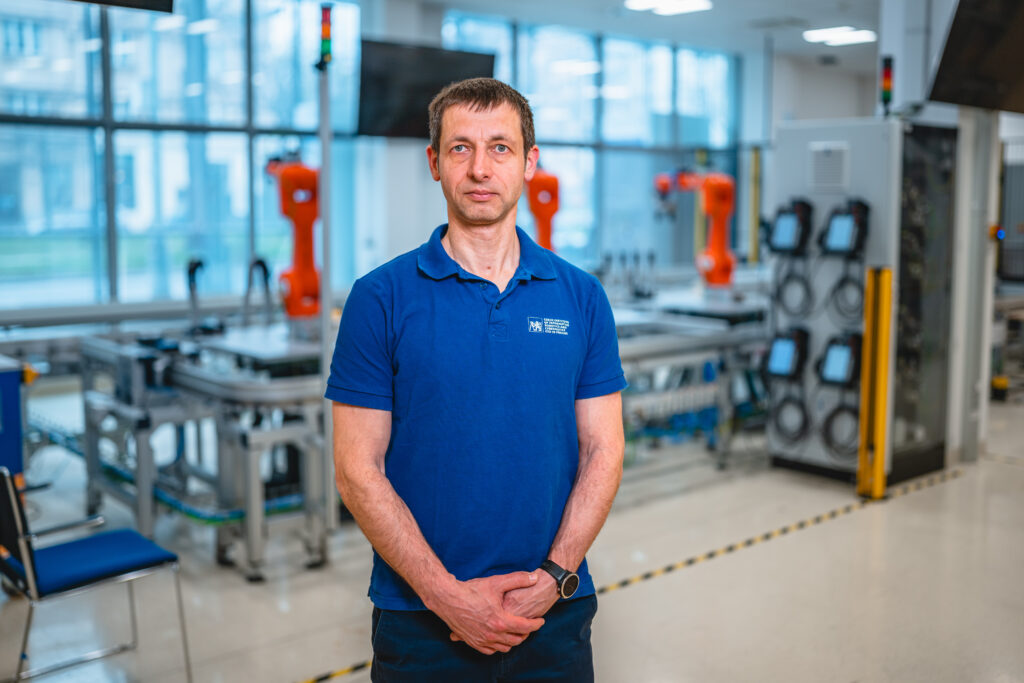
“All components are brought together, showing how Manufacturing as a Service operates as a unified system. This is enabled by standardized interfaces based on OPC UA and MQTT, real-time data exchange, and the integration of existing machines into one coordinated environment.” Pavel Hradecký
The coordination of the system is handled automatically using modern methods based on machine learning and AI, enabling flexible orchestration of distributed manufacturing operations.
Flexible Production Ready for Real Industrial Environments
What makes this system powerful is its flexibility. Operations are not fixed to specific machines or locations. They can be reassigned at any time based on capacity, availability, or changing requirements.
The concept has been demonstrated using the T-Process Platform, an industrial Manufacturing Execution System already deployed at multiple industrial sites, making adoption in real manufacturing environments straightforward.
From Fixed Planning to Adaptive Manufacturing
From coordinated operations to a finished product, the RICAIP Maze demonstrator illustrates how manufacturing can evolve:
- from fixed planning to adaptive production,
- from isolated systems to interconnected industrial environments,
- and from rigid workflows to flexible and resilient manufacturing ecosystems.
The demonstrator highlights how Manufacturing as a Service can support the next generation of industrial production through:
- real-time coordination,
- distributed manufacturing infrastructure,
- standardized industrial communication,
- machine learning and AI methods,
- and flexible orchestration across interconnected production sites.